By Peter Deadman
The Story of Qigong
Chapter 1: Introduction to The Flow
According to the Lüshi Chunqiu (The Annals of Lü Buwei), written in the 3rd century BCE:
"The reason flowing water does not become putrid, and the pivots of a door are not eaten by insects, is because they move. The physical body and its Qi are like this too. If the body does not move, then the essential Qi does not flow. If this does not flow, then the Qi clogs up."
This idea of constant movement—like flowing water—and particularly of soft, relaxed, free movement, has been at the core of the Chinese health tradition for nearly two and a half thousand years.
So, what is Qigong?
The Chinese word is made up of two characters: Qi and Gong.
- Gong is the easier of the two to translate. It is usually translated as either "cultivation" (in the sense of cultivating a garden, for example) or perhaps better as "skill."
- Qi is harder to translate. It has so many different meanings depending on context, but for the purposes of Qigong, it is fair to translate it as "vitality" or "life itself."
So we could say Qigong is "skill in cultivating vitality" or simply "skill in life."
Qigong is a relatively modern "umbrella term" for a wide range of traditional Chinese practices deriving from Daoism, Buddhism, martial arts traditions, Chinese medicine, and folk culture. It is practiced for different reasons: some primarily to maintain health and cure disease; others for strength and martial or sporting prowess; and still others for transcendence and connection with Nature and the Dao.
Because it is practiced for different reasons and comes from different traditions, various Qigong schools and teachers may vary quite widely in what they offer.
Peter Deadman's approach—the way that he practices and teaches—is that it is the equal cultivation of the 'Three Treasures': the Body, the Breath, and the Mind. When these three are equally cultivated, wrapped up together, and integrated, then we have the transformative experience of Qigong.
The Science of Flow
We know from a considerable body of research that Qigong and Tai Chi have the potential to:
- Strengthen bones.
- Increase heart and lung fitness and arterial health.
- Tonify the immune system.
- Help with weight loss and improve flexibility.
- Significantly reduce the risk of falling in older people (thereby reducing hospital visits and medication use).
- Improve mental health and cognitive functioning.
- Help a wide range of symptoms and diseases including arthritis, fatigue, diabetes, high blood pressure, and various symptoms of cancer.
The question is: How come these slow, seemingly non-aerobic movements are so beneficial to the body and mind?
One important way that Chinese medicine defines health is with the idea of free flow. When Qi and blood flow freely and easily throughout the whole body, we are well. When they are stagnant and obstructed, we are more likely to suffer from pain and disease. Modern medicine shares a similar view: for the body to be healthy, blood has to flow freely through the 100,000 kilometers of blood vessels—major, minor, and micro—in the human body.
There are two main ways of achieving this free flow.
1. The Yang Approach (Aerobic/External): In the conventional aerobic exercise model, we drive flow by increasing the pumping power of the heart with vigorous exercise. This is similar to the "hard" styles of martial arts in China, where practitioners build muscle and strength through exertion.
2. The Yin Approach (Internal/Qigong): In Qigong and the internal martial arts (like Tai Chi), free flow is achieved by relaxing and releasing. When we learn to stand, move, and sit without tension—patiently dissolving obstruction—the Qi and blood can better perform their natural function, which is to flow. While much Qigong practice builds real strength, it always focuses on maintaining softness.
Ideally, everyone should do some of both. However, "external" exercise carries risks of injury, overtraining, and becomes challenging as we age. Furthermore, the flow from aerobic exercise can be short-lived as the body-mind returns to a default state of stress.
With internal practices like Qigong:
- There is minimum risk of injury.
- It can be practiced at any age.
- We slowly change the body and mind's default state to one of ease, mental presence, and relaxation, making the state of free flow more permanent.
Cultivating the Three Treasures
Cultivating the Body includes equalizing weight and developing awareness of movement; restoring elastic flexibility to the fascia through mindful lengthening; sinking the Qi to lower the center of gravity; and bringing greater enjoyment to the physical experience.
Cultivating the Breath involves smoothly integrating breath with movement and learning to breathe slowly, evenly, and deeply into the lower abdomen (the Dantian). This triggers a healing parasympathetic state while building vital energy.
Cultivating the Mind means being fully present. This brings the benefits of meditation—centeredness, calm, and psychological resilience—into our moving life.
As the 16th-century Vegetable Root Discourse says:
"The cool eye discerns man's character. The cool ear hears the intent in their speech. Cool emotions plumb others' feelings. The cool mind penetrates everything."
The ultimate benefit of Qigong is a calm, centered, resilient mind, and yet... a heart and mind that are open to others and to the wonders of the universe.
Chapter 2: The Ancient Roots
The origins of Qigong are likely very ancient. We know that shamans entered into the spirits of different animals in their powerful healing dances, and this is mirrored in the practice of Five Animal Qigong (Wu Qin Xi)—one of the most popular styles today and the earliest to be described in Chinese texts.
The relationship between Qigong and dance is made clear in the 3rd century BCE Lüshi Chunqiu, which prescribes "certain dances which guide the breath and ensure that it moves throughout the body in a harmonious fashion."
Another passage from the same foundational text introduces the perennial metaphor of flowing water:
"Flowing waters do not stagnate because they move. The Qi and bodily frame are also like this. If the bodily frame does not move, the vital essence does not circulate, and if it does not circulate, the Qi will coagulate."
Early Descriptions and Artifacts
Slow, deep breathing is essential to genuine Qigong. The earliest text describing this was found inscribed on a jade block from the 4th century BCE [visualize a small, intricate jade artifact with ancient characters]. It describes a complex method of sinking the breath so that it can "grow upwards" to the brain, concluding: "Who practices this will attain long life."
Around the same time, the Neiye (Inward Training)—a collection of beautiful verses and a core text of early Daoist meditation—gave advice that resonates with all modern practitioners of internal arts:
"For all to practice this way: You must coil, you must contract. You must uncoil, you must expand... If people can be aligned and tranquil, their skin will be ample and smooth, their eyes and ears acute and clear, their muscles supple and their bones strong."
In the early 1970s, a remarkable discovery was made at Mawangdui in Changsha. A tomb sealed in 168 BCE was opened to reveal treasures including a silk scroll
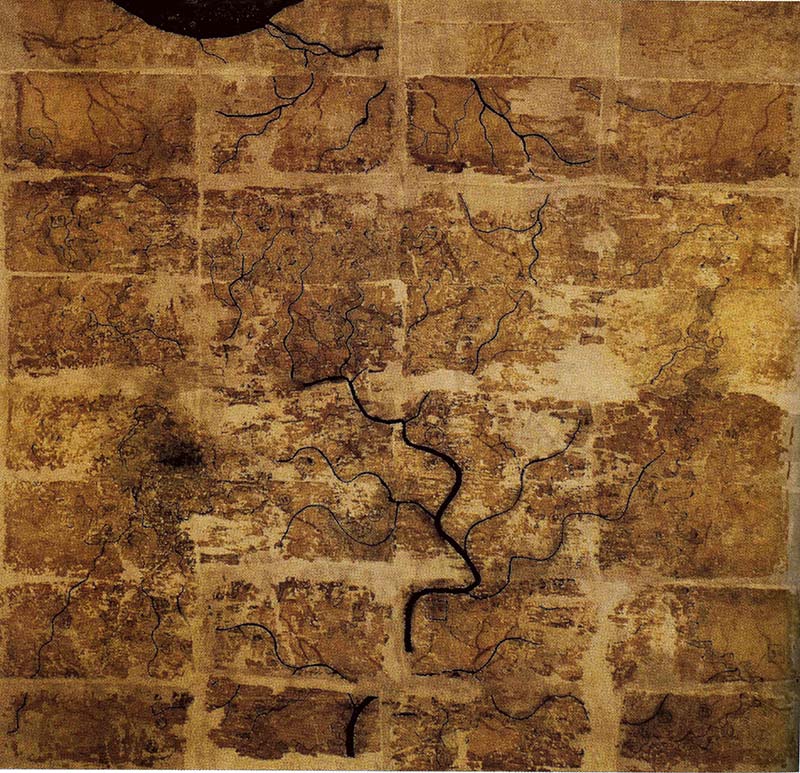
depicting figures practicing Daoyin (Guiding and Pulling)—an early term for Qigong. These figures are shown stretching, bending, and breathing, illustrating the "skill of leading or guiding Qi."
A few years later at Zhangjiashan, bamboo slips were found containing the Yinshu (Pulling Book), describing 40 different exercises for health, including toe flexing, spinal twists, and lunges.
The Great Doctors
Hua Tuo (referred to in some texts as Huo Tao), the famous 3rd-century doctor credited with being the first in China to use anesthesia (Mafeisan), wrote:
"I have one art called Five Animals Frolics. The first is called Tiger, the second Deer, the third Bear, the fourth Gibbon, the fifth Bird. These also cure disease. One should use these frequently."
The 4th-century Great Clarity Scripture on Healing Exercises (or Daoyin Jing) was entirely devoted to practices integrating movement, breathing, meditation, and visualization. It promised that diligent practice would eliminate "unhealthy Qi" from the limbs and joints, leaving only "healthy Qi" in residence.
Later, the 7th-century doctor Sun Simiao—so revered he is known as the "King of Medicine"—wrote:
"If people exercise their bodies, the hundred ills cannot arise."
"The way of nurturing life is to constantly strive for minor exertion, but never become greatly fatigued."
Throughout the Song, Ming, and Qing dynasties, popular sets like the Baduanjin (Eight Pieces of Brocade) appeared and evolved into the forms practiced worldwide today. Concurrently, the great internal martial arts—Tai Chi Chuan, Xing Yi Quan, and Bagua Zhang—developed their core training methods (Neigong), sharing the body-breath-mind integration of the ancient health practices.
Chapter 3: The Modern History
The modern history of Qigong begins in 1949 with a young Communist Party soldier named Liu Guizhen.
After suffering for years from weakness, insomnia, and gastric ulcers, he returned from his native village transformed, having been healed by an old master who taught him Nei Yang Gong (Inner Cultivation Exercise). [A visual of a vintage black and white photo of Liu Guizhen]. Practicing for 102 days—standing in silent meditation, regulating his breath, and focusing on the Yongquan point on his feet—he repeated the mantra: "My organs move, my mind is still."
Liu recovered his health, and his success intrigued the local Communist Party. He began teaching a method based on what he had learned, coining the term "Qigong" to describe it. By 1953, he had published The Practice of Qigong Therapy, which sold two million copies.
The Dark Years
However, by the mid-1960s, the political tide turned. Qigong was branded a "rotten relic of feudalism". Slogans declared: "Those who practice Qigong are monsters." Liu Guizhen was humiliated, expelled from the Party, and sent to a labor camp. Many early pioneers suffered severely.
Yet, during the Cultural Revolution (1966–1976), a courageous woman named Guo Lin kept the practice alive. [Image of Guo Lin demonstrating her walking technique]. Diagnosed with terminal cancer, she developed "Walking Qigong" based on her childhood training. She practiced and taught in public parks, moving constantly to evade police harassment. Her anti-cancer Qigong became famous, and she eventually attracted thousands of students.
Qigong Fever
When the Cultural Revolution ended, Qigong exploded. As the official grip loosened, "Qigong Fever" took hold. At its height in the late 1980s, over 100 million practitioners were involved. It was reported that top Party officials, including Deng Xiaoping, retained Qigong masters.
But with popularity came hysteria. "Supernatural" masters appeared, filling stadiums [footage of stadium healing sessions] and claiming to cure millions remotely. Reports of masters controlling electricity or changing the weather coincided with Cold War interests in "psychic soldiers" (reminiscent of the film The Men Who Stare at Goats).
The rise of Falun Gong, a group that eventually threatened the Party's power, led to a ruthless crackdown. The bubble burst. Fake research was exposed, and Qigong largely returned to its roots as a humble body-mind practice.
The Miracle of the Ordinary
Modern Qigong is the story of how ancient practices exploded into global popularity. It is also a cautionary tale of the desire for superpowers—telekinesis, distant healing, and magic.
But fundamentally, Qigong is a profound method of self-cultivation.
The great 19th-century doctor Fei Boxiong said:
"There exist no miraculous methods in the world, only plain ones. And the perfection of the plain is miraculous."
The renowned master Wang Xiangzhai said:
"The ordinary is the extraordinary."
In my view, the yearning for the extraordinary often obscures the miracle of the ordinary: the ordinary miracle of existence that we are surrounded by every moment of our lives.